GEOLOGY & RESOURCES
Resource Risk Prediction
PROJECT VISUAL GALLERY

01 / PROJECT CONTEXT
An operating copper-suphide mine was experiencing recurring differences between its resource model and monthly production results. This discrepancy were caused by several unforeseen fundamental variables in sample data, mathematical error, and unmatched perception between work functions
The variance affected confidence in ore quantities, mine production forecasts, and short-term (monthly/3MRP) production decisions. The important question was not simply whether the model was right or wrong. The exploration and mine operation team needed to understand which sources of uncertainty were material, how they interacted, and where additional data could improve a planning decision.
02 / MY ROLE
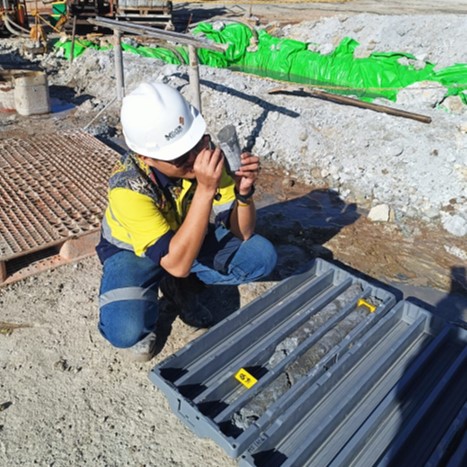
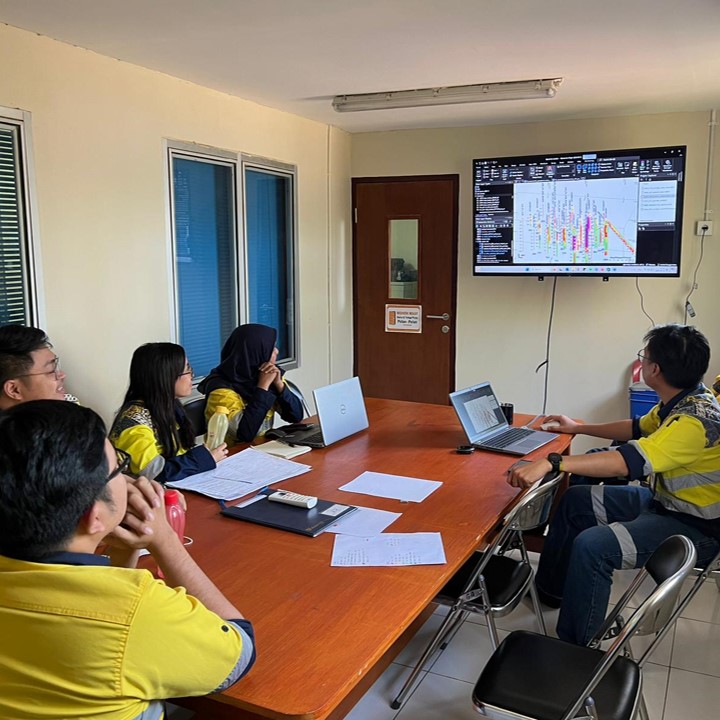
As an ore study and geological modeling geologist, I was assigned to coordinate the investigation work across exploration data, resource model, grade control model, mine operations, laboratory information, and production reconciliation. It was a collective analytical work with field evidence and geostatistical spatial approach to investigate the cause and effect of the risk regarding model-vs-actual ore reconciliation.
My main responsibility was to communicate the analytical findings to technical and operational stakeholders, then provide quantified and manageable risk analysis to act on.
03 / THE CHALLENGE
Several factors could explain the variance, and evaluating them separately would not show their combined influence on production.
- Spatial grade and geological continuity
- Drillhole spacing and distance from available geological information.
- Bulk density assumptions for lithology.
- Sampling support, preparation, and laboratory QA/QC.
- Block-model parameters and estimation decisions.
- Grade-control selectivity and operating practices.
04 / APPROACH
The investigation began with production reconciliation and worked backwards towards the underlying geological and data assumptions.
- Compared block-model, grade-control, and production information to identify where tonnage, grade, or domain differences occurred.
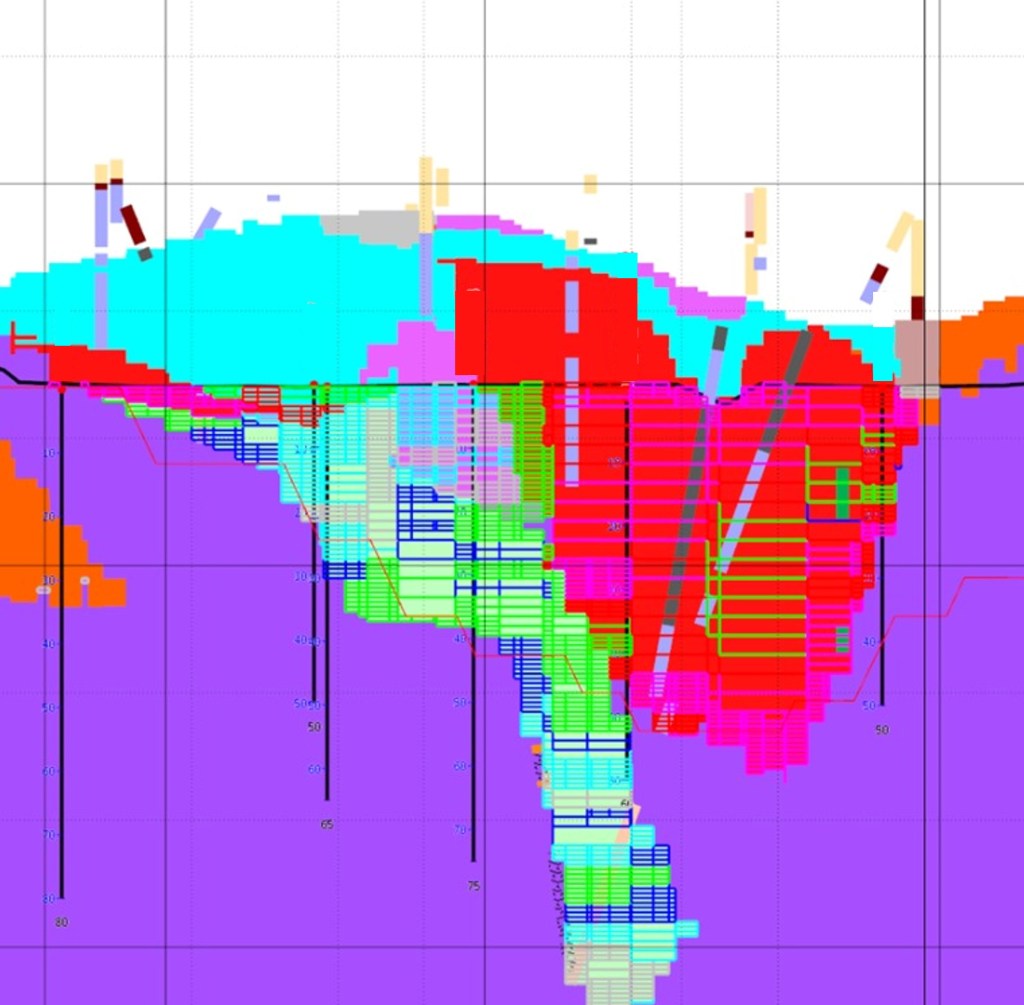
- Used 3D drillhole-distance analysis to examine whether areas with limited geological support showed greater production variance.
- Reviewed geological boundaries, local variability, sample support, and estimation behaviour within the affected areas.
- Coordinated density sampling and statistical review across different ore types.
- Checked analytical findings against mapping, pit observations, geological interpretation, and operating conditions.
- Prioritised validation and infill drill data according to its potential influence on mine planning.
05 / OUTCOME & PRACTICAL VALUE
The studies provided a clearer explanation of where model confidence was strong and where it was limited. It also provided additional information and risk prediction at the mine-front that could materially change a planning decision. Reconciliation process became a forward-looking resource-risk control rather than only retrospective historical reporting procedure.
~20% → ~5%
model-to-production variance
~2%
verified adjustment to the resource basis
Repeatable/Practical
spatial data validation framework
06 / PROFESSIONAL LESSON
Resource and reserve risk rarely arises from a single parameter. It develops through the interaction of geological interpretation, drilling information, sampling practices, density assignment, estimation parameters, mining selectivity, and operational control.
Resource-risk analysis is not intended to assign blame for uncertainty, but to identify and quantify it. By clarifying its potential operational consequences, the analysis helps direct verification and additional data collection towards the areas where improved information can meaningfully support better decisions.
Confidentiality
Mine names, coordinates, drillhole identifiers, geological sections, production quantities, grades, model parameters, and commercial implications have been omitted. Model views and charts should be reconstructed with synthetic labels and modified coordinates.

